If you’re trying to reduce dust, dander, and fine debris at home, the right robot vacuum can make daily cleanup much easier.
Our picks for the best robot vacuum for allergies focus on sealed filtration, strong suction, and low-maintenance dust disposal.
Best 10 Robot Vacuum for Allergies Picks for 2026
Allergen-Friendly Auto-Empty Combo
Roomba 105 Combo with AutoEmpty Dock

- Auto-empty dock traps 99% of allergens
- LiDAR mapping for precise room coverage
- Vacuum and mop with carpet detection
Best For: Homes that want less dust exposure and a low-touch cleaning routine
Quiet Slim Pick
eufy 11S MAX Quiet Robot Vacuum

- Slim 2.85-inch body reaches under furniture
- Quiet operation for low-disruption cleaning
- BoostIQ adapts suction across surfaces
Best For: Simple, quiet cleaning on hard floors and medium-pile carpet
HEPA Pet-Hair Helper
Shark AV2501AE AI Robot Vacuum

- True HEPA filtration traps 99.97% of dust and allergens
- Self-emptying base stores debris for up to 60 days
- Matrix Clean and self-cleaning brushroll help with pet hair
Best For: Allergy-prone homes with pets that want deep cleaning and low-maintenance emptying
HEPA Vacuum-Mop Pick
Shark Matrix Plus Robot Vacuum and Mop
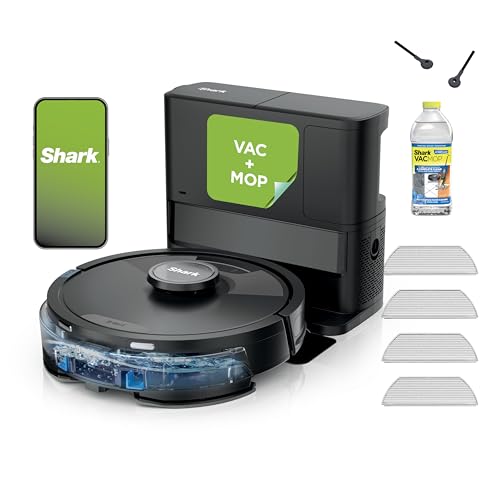
- HEPA base traps 99.97% of dust and allergens
- Sonic mopping handles hard floors
- Matrix Clean and CleanEdge improve coverage
Best For: Mixed-floor homes that want allergen control plus mopping
Budget-Friendly Deep Clean
iRobot Roomba 105 Vac Robot Vacuum

- 70X power-lifting suction
- ClearView LiDAR mapping
- Room targeting and spot cleaning
Best For: Allergy-conscious buyers who want simple, strong everyday floor cleaning.
HEPA Self-Empty Option
Shark AV2501S AI Ultra Robot Vacuum

- True HEPA allergen trapping
- 30-day self-empty base
- Matrix Clean with LiDAR mapping
Best For: Homes that want stronger allergen capture and hands-off maintenance.
Hands-Free Vacuum and Mop
roborock Q7 M5+ Robot Vacuum and Mop

- 10000Pa suction power
- 7-9 weeks self-emptying
- Vacuum and mop combo
Best For: Buyers who want strong suction, less maintenance, and mopping support.
All-Day Pet Hair Cleanup
Shark AI Ultra Robot Vacuum, 60-Day Self-Emptying Base

- 60-day bagless self-empty base
- Matrix Clean multiple-pass coverage
- Self-cleaning brushroll for less hair wrap
Best For: Pet owners and allergy-conscious homes with mixed floors
Strong Suction Mopping Combo

- 6000Pa suction for dust and pet hair
- HEPA filter with vacuum-and-mop cleaning
- LiDAR mapping with no-go zones
Best For: Buyers who want a budget-friendly mapped combo vacuum
Maximum Pickup Power
D13S MAX Self-Emptying Robot Vacuum

- 11500Pa suction for embedded debris
- Triple-stage HEPA filtration system
- Self-emptying base with 90-day capacity
Best For: Busy households wanting maximum suction and low-maintenance cleaning
Allergen-Friendly Auto-Empty Combo – Roomba 105 Combo with AutoEmpty Dock
If you want a robot vacuum for allergies that helps reduce dust exposure during cleanup, this Roomba combo is built around a self-emptying dock and HEPA-like allergen trapping in the bag. It also adds LiDAR mapping, strong suction, and mopping, so it can handle everyday floor care without forcing you to empty a dusty bin as often.
Best For: Households that want hands-off emptying, mapped cleaning, and a vacuum-mop combo with allergen control.
Pros:
- AutoEmpty dock stores debris for up to 75 days and traps 99% of allergens as small as 0.7 microns.
- 70X more power-lifting suction plus a multi-surface brush helps pick up dirt and dust bunnies.
- ClearView LiDAR mapping supports precise navigation and obstacle avoidance.
- Automatically avoids carpets while mopping, so rugs stay dry.
Cons:
- Requires a 2.4 GHz network for setup and operation.
- It is a combo unit, so buyers focused only on vacuuming may not need the mop features.
This is a strong pick if allergy reduction is a priority and you want to spend less time dealing with debris. The self-emptying base is the standout feature here, especially for anyone who wants to avoid a dust cloud when emptying the robot.
Quiet Slim Pick – eufy 11S MAX Quiet Robot Vacuum
For a robot vacuum for allergies on a tighter budget, the eufy 11S Max focuses on quiet, consistent floor cleaning rather than advanced smart-home extras. Its slim profile can get under low furniture, and the washable filter plus strong suction on hard floors and medium-pile carpet make it a practical everyday cleaner.
Best For: Buyers who want a simple, quiet robot vacuum without Wi-Fi or app setup.
Pros:
- Super-thin 2.85-inch design helps it fit under low furniture.
- Quiet operation is suited to cleaning at any hour.
- BoostIQ adjusts suction quickly for different surfaces.
- Washable filter and self-charging design keep ownership simple.
Cons:
- No Wi-Fi or app connectivity.
- Remote and on-device controls only may feel basic compared with mapped robots.
This model makes sense if you mainly want a dependable vacuum to reduce dust and debris without a complicated setup. It is not the most advanced choice, but its low noise and slim shape are appealing for frequent cleaning.
HEPA Pet-Hair Helper – Shark AV2501AE AI Robot Vacuum
If you are shopping for a robot vacuum for allergies and pet messes, this Shark model stands out for its HEPA filtration and self-emptying base. It combines LiDAR mapping, matrix-style multi-pass cleaning, and strong suction to cover more of the floor while helping trap fine dust and allergens in the sealed base.
Best For: Pet-friendly homes that want HEPA filtration, self-emptying convenience, and mapped whole-home cleaning.
Pros:
- True HEPA filtration captures and traps 99.97% of dust and allergens down to 0.3 microns.
- Bagless self-emptying base holds up to 60 days of dirt and debris.
- Matrix Clean navigation takes multiple passes for deeper coverage.
- Self-cleaning brushroll is designed to handle pet hair, dust, and dander.
Cons:
- It is vacuum-only, so there is no mopping function.
- Voice control depends on Alexa or Google Assistant compatibility.
For allergy-focused shoppers, the HEPA base and self-emptying design are the main reasons to consider this Shark. It is especially compelling if pets add extra hair and dander to the mix and you want a robot that can clean with minimal daily upkeep.
HEPA Vacuum-Mop Pick – Shark Matrix Plus Robot Vacuum and Mop
This Shark Matrix Plus is a strong robot vacuum for allergies if you want HEPA filtration plus a mop for hard floors. It combines sonic mopping, matrix-style multi-pass vacuuming, and a self-emptying base, so it can manage both dust and everyday floor messes while keeping debris sealed away in the dock.
Best For: Buyers who want a vacuum-and-mop combo with HEPA filtration and edge-focused cleaning.
Pros:
- True HEPA filtration and an anti-allergen seal trap 99.97% of dust and allergens in the base.
- Matrix Clean uses multiple passes for more thorough carpet coverage.
- CleanEdge Detect targets debris along edges and corners.
- Sonic mopping adds hard-floor cleaning in the same robot.
Cons:
- The base holds up to 30 days of debris, less than some larger-capacity self-empty docks.
- It uses a cloth filter rather than a true HEPA filter in the robot itself.
For homes that need both dust control and floor washing, this model offers a practical mix of features. The HEPA-sealed base is the headline benefit, while the combo cleaning setup makes it a versatile choice for mixed flooring.
Budget-Friendly Deep Clean – iRobot Roomba 105 Vac Robot Vacuum
If you want a robot vacuum for allergies that focuses on everyday dust removal, the Roomba 105 Vac is built around strong suction, LiDAR mapping, and room-by-room control. It uses a 3-stage cleaning system with an edge-sweeping brush and can target extra-dirty spots, which makes it a practical pick for keeping floors cleaner between deeper cleans.
Best For: Allergy-conscious buyers who want a simple, app-controlled robot for carpets and hard floors.
Pros:
- 70X power-lifting suction and a 3-stage cleaning system help pull up dirt and dust bunnies.
- ClearView LiDAR maps the home for precise coverage and neat-row cleaning.
- Custom room cleaning, keep-out zones, and spot cleaning add useful control.
- Recharge-and-resume support helps it finish larger cleaning jobs efficiently.
Cons:
- Uses a cartridge filter rather than a HEPA system.
- No self-emptying base included.
- Wi-Fi setup is 2.4 GHz only.
This is a solid choice if you want a straightforward robot vacuum that emphasizes suction, mapping, and easy app control. It’s best suited to routine cleaning where reducing dust buildup matters more than premium filtration extras.
HEPA Self-Empty Option – Shark AV2501S AI Ultra Robot Vacuum
For a robot vacuum for allergies, the Shark AV2501S stands out because it combines powerful suction with true HEPA filtration in a self-emptying base. It is designed to trap 99.97% of dust and allergens down to 0.3 microns, while Matrix Clean navigation helps it make multiple passes for more complete coverage.
Best For: Homes that need allergen capture, pet hair pickup, and less frequent emptying.
Pros:
- True HEPA filtration in the self-emptying base captures and traps 99.97% of dust and allergens.
- Bagless base holds up to 30 days of dirt and debris.
- Matrix Clean navigation uses multiple passes for thorough coverage.
- Self-cleaning brushroll and strong suction are built for pet hair and mixed floors.
Cons:
- Runtime is up to 120 minutes, which is shorter than some competitors.
- It uses voice or app control, but the included details list app control rather than broader smart-home automation features.
- Heavier than some robot vacuums at 14.4 pounds.
If allergy reduction is your priority, this Shark model has the most relevant filtration setup in the group. The self-emptying design also helps reduce how often you come into contact with collected dust and debris.
Hands-Free Vacuum and Mop – roborock Q7 M5+ Robot Vacuum and Mop
If you’re comparing a robot vacuum for allergies and want to catch fine dust as well as regular debris, the roborock Q7 M5+ brings high suction, sealed dust collection, and mopping in one system. Its 2.7L dust bag and self-emptying dock can reduce maintenance for up to 7-9 weeks, while PreciSense LiDAR maps the home for efficient coverage.
Best For: Buyers who want strong suction, long self-emptying intervals, and vacuum-plus-mop cleaning.
Pros:
- 10000Pa HyperForce suction helps lift pet hair and debris from carpets and hard floors.
- 2.7L sealed dust bag supports up to 7-9 weeks of hands-free self-emptying.
- Dual anti-tangle design helps reduce hair wrap on the brush and side brush.
- Vacuuming and mopping together can help pick up fine dust left behind after vacuuming.
Cons:
- App supports 2.4GHz Wi-Fi only.
- Uses a cartridge filter rather than a HEPA filter.
- The self-emptying benefit depends on the bag and dock setup, which adds more hardware.
This Roborock is a strong fit if you want high suction and less frequent bin maintenance in a single package. The mop function adds extra value for homes where dust control and floor freshness both matter.
All-Day Pet Hair Cleanup – Shark AI Ultra Robot Vacuum, 60-Day Self-Emptying Base
If you want a robot vacuum for allergies, the Shark AI Ultra is built to reduce the amount of dust, dander, and pet hair sitting on floors between deep cleans. Its strong suction, Matrix Clean passes, and self-cleaning brushroll help it pick up debris across carpets and hard floors, while the self-emptying base cuts down on how often you have to handle dirt.
Best For: Homes with pets and mixed flooring that need frequent, low-maintenance cleaning.
Pros:
- Self-emptying base holds up to 60 days of dirt and debris.
- Matrix Clean uses multiple passes for more complete coverage.
- Self-cleaning brushroll helps reduce hair wrap during cleanup.
- LiDAR mapping and app/voice control make scheduling easy.
Cons:
- Up to 90 minutes of runtime may be limiting in larger homes.
- Bagless base may still require periodic emptying and maintenance.
Overall, this is a strong fit if you want an automated cleaner that prioritizes everyday debris pickup and reduced contact with dust. It’s especially appealing for pet owners who want a more hands-off routine.
Strong Suction Mopping Combo – Bagotte M6 LiDAR Robot Vacuum
For shoppers comparing a robot vacuum for allergies, the Bagotte M6 stands out for its HEPA filter, strong suction, and LiDAR mapping that help it clean methodically instead of wandering randomly. It also combines sweeping, vacuuming, and mopping, which can be useful when you want to stay on top of dust and pet hair across hard floors and carpets.
Best For: Budget-minded buyers who want a combo robot with mapping and HEPA filtration.
Pros:
- 6000Pa suction is designed to pick up dust, crumbs, and pet hair.
- HEPA filter and mopping function add extra cleaning support.
- LiDAR navigation creates efficient routes and full-home mapping.
- No-go zones, app control, and voice support improve flexibility.
Cons:
- Only supports 2.4GHz WiFi, not 5GHz.
- Best suited to general cleanup rather than the deepest possible debris removal.
This is a practical pick if you want smarter navigation and a multi-function cleaner without moving into the highest-priced tier. Its allergy-friendly appeal comes from the HEPA filter plus routine dust and pet hair pickup.
Maximum Pickup Power – D13S MAX Self-Emptying Robot Vacuum
If your priority is a robot vacuum for allergies that can handle heavier debris, the D13S MAX focuses on very high suction, self-emptying convenience, and triple-stage HEPA filtration. It vacuums, sweeps, and mops in one pass, while LiDAR mapping and carpet auto-boost help it adapt to different rooms and floor types.
Best For: Busy homes with pets, carpets, and a strong need for hands-free maintenance.
Pros:
- 11500Pa suction is built for embedded pet hair and debris.
- Self-emptying base supports over 10 weeks of hands-free use.
- HEPA triple-stage filtration adds a useful allergy-focused feature.
- LiDAR mapping, no-go zones, and carpet auto-boost improve control.
Cons:
- Noise level is listed at 70 dB, which may be noticeable.
- Large feature set may be more than casual users need.
For homes that need serious pickup power and less direct contact with dust, this model is the most aggressive option in the group. It pairs high suction with a large-capacity self-emptying system to keep maintenance low.
How We Picked the Best Robot Vacuum for Allergies
We prioritized features that matter most for allergy control: high-efficiency filtration, strong pickup on hard floors and carpets, reliable navigation, and self-emptying docks that reduce your exposure to dust when emptying the bin. We also considered battery life, smart mapping, and how easy each model is to maintain over time.
Quick Comparison: What Matters Most
When comparing a Robot Vacuum for Allergies, the biggest differences usually come down to filtration and dust handling. Models with self-emptying bases help keep collected debris sealed away longer, while compact vacuums without a dock may need more frequent manual emptying. If you have pets, look for stronger suction and tangle-resistant brush systems to better manage hair and dander.
Key Buying Factors for a Robot Vacuum for Allergies
Filtration and Dust Containment
Look for HEPA or high-efficiency filtration and a design that limits dust leakage. A sealed dust path is especially useful if you’re sensitive to allergens.
Self-Emptying Capacity
A larger base means less frequent maintenance and less direct contact with debris. This is one of the most helpful upgrades for allergy-prone households.
Suction and Floor Coverage
Higher suction helps lift fine dust from rugs, baseboards, and hard floors. Smart navigation also matters because missed areas can let allergens build up.
Maintenance and Accessory Costs
Filter replacement, brush cleaning, and bag or bagless bin upkeep all affect long-term convenience. A low-maintenance system is usually better for consistent allergy control.
Who Should Buy Which Robot Vacuum for Allergies?
If you want the least hands-on maintenance, choose a self-emptying model with strong filtration. If you mainly need a quiet, slim vacuum for light daily pickup, a compact option can work well in smaller spaces. Homes with pets should lean toward models with stronger suction, better hair handling, and larger-capacity docks. For mixed floors and heavier dust, a mapping-enabled model with mopping may provide the most complete routine cleaning.
In short, the best choice depends on whether your priority is fewer dust exposures, stronger deep cleaning, or the easiest possible upkeep.