Finding the right saddle stool for back pain can make a real difference if you sit for long stretches at a salon, clinic, studio, or home workstation. The best options encourage a more open hip angle, easier movement, and a posture that feels less compressed.
Below, we’ve rounded up 10 practical picks with features that matter most: adjustability, lumbar support, wheel stability, seat comfort, and build quality.
Best 10 Saddle Stool for Back Pain Picks for 2026
Lightweight Ergonomic Pick
FIRAVOE Light Grey Adjustable Saddle Stool

- 18"-26" adjustable height
- Ergonomic saddle shape for posture
- Swivel wheels for smooth movement
Best For: People who want a simple adjustable stool for salon, clinic, or office use
Back-Support Comfort Pick
Saddle Stool Chair with Back Support

- Includes a reclining backrest
- 20"-26" adjustable height
- 400 lb capacity with quiet casters
Best For: Users who want extra back support during long work sessions
Feature-Rich Upgrade
Ergonomic Saddle Stool with Backrest and Footrest

- Backrest and footrest add support
- 21.5"-29.5" adjustable height
- 400 lb capacity with locking wheels
Best For: Users who want maximum adjustability and extra seating support
Heavy-Duty Support Pick
Ergonomic Saddle Chair with Adjustable Back Support

- Adjustable backrest for lumbar support
- 21"-26" height range with swivel
- 400 lb capacity with reinforced base
Best For: Frequent users who need durable support for long workdays
Ergonomic Saddle Lift
Saddle Stool with Wheels and Backrest
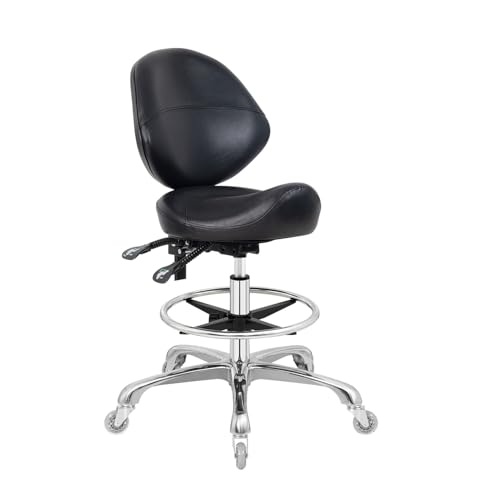
- Ergonomic saddle seat helps reduce pressure on the back, hips, and spine.
- Height adjusts from about 22.4 to 30.3 inches with 360-degree swivel.
- Quiet rollerblade wheels and a 350-lb base add smooth, stable mobility.
Best For: Salon, clinic, home office, or tattoo work with back support
Posture Support Pro
Saddle Chair with Back Support

- Saddle seat is designed to support posture and help with back pain relief.
- Height adjusts from 19 to 28 inches with an SGS-certified cylinder.
- Steel base, foot rings, and dual casters add stability and easy rolling.
Best For: Professionals who want back support and a 400-lb capacity
Tailbone Relief Ride
Adjustable Saddle Stool with Back Support

- Curved seat is designed to spread weight more evenly for comfort.
- Five quiet swivel wheels and a gas lift support smooth movement.
- Thick foam and PU leather are built for easy daily cleaning.
Best For: Compact workspaces needing a rolling saddle stool with back support
Backrest Comfort Upgrade

- Ergonomic saddle seat helps reduce pressure on the back and spine.
- Upgraded backrest is designed to sit closer to the spine for upright support.
- Quiet smooth wheels and tool-free assembly add everyday convenience.
Best For: Users who want back support plus an ergonomic saddle seat
Footrest-Friendly Ergonomics
Saddle Stool with Ring Footrest

- Curved saddle seat is designed to encourage upright posture and reduce back pressure.
- Ring footrest adds extra leg support for longer sitting sessions.
- 360-degree swivel and rolling casters improve mobility at workstations.
Best For: People who want a saddle stool with added foot support
Heavy-Duty Comfort Build
VEVOR Saddle Stool with Back Support

- Thick 2.4-inch cushion adds comfort for longer sitting periods.
- Ergonomic saddle seat is designed to help reduce pressure on the waist and legs.
- 450 lb capacity and widened base make it a robust pick.
Best For: Buyers who need a sturdier saddle stool with thicker cushioning
Lightweight Ergonomic Pick – FIRAVOE Light Grey Adjustable Saddle Stool
If you want a saddle stool for back pain that keeps things simple, this FIRAVOE model focuses on core support and easy mobility. The saddle shape is designed to encourage better posture and reduce strain on the back and hips, while the 18″-26″ height range makes it easy to set up for salon, clinic, or office work.
Best For: Users who want an adjustable, wheeled saddle stool for everyday professional tasks.
Pros:
- Ergonomic saddle seat aims to support posture and reduce back and hip strain.
- Height adjusts from 18″ to 26″ for flexible positioning.
- 360-degree swivel and 5 casters help it move smoothly and quietly.
- PU leather and high-density sponge add comfort and a clean, professional look.
Cons:
- No backrest, so it may not suit buyers who want extra lumbar support.
- Seat width is 14 inches, which may feel compact for some users.
Overall, this is a practical entry-point saddle stool with the main essentials covered: adjustable height, easy rolling, and an ergonomic shape. It is a good fit if you want a straightforward stool that supports active work without extra bulk.
Back-Support Comfort Pick – Saddle Stool Chair with Back Support
This saddle stool for back pain adds a backrest to the usual saddle-seat setup, making it a strong option if you want more support during long sitting sessions. The wide padded seat, reclining backrest, and adjustable seat height give it a more comfort-focused design for demanding workspaces.
Best For: Buyers who want a saddle stool with back support and a higher weight capacity.
Pros:
- Back support and ergonomic saddle seat are designed to help alleviate back pain and improve posture.
- Three adjustable functions: 20″-26″ height, reclining backrest, and reclining seat.
- High-resilience sponge and premium organic leather aim for lasting comfort and easy cleaning.
- 400 lb max load and aluminum alloy frame add confidence for heavier daily use.
Cons:
- Heavier at 16.7 pounds than simpler saddle stools.
- Seat height tops out at 26 inches, which may be limiting for taller workstations.
For shoppers who want more than a basic stool, this model stands out for its added backrest and adjustable recline. It offers a useful balance of support, durability, and mobility for work that keeps you seated for extended periods.
Feature-Rich Upgrade – Ergonomic Saddle Stool with Backrest and Footrest
If you need a saddle stool for back pain with more adjustment options, this version adds a backrest, footrest, and a wider height range. The saddle seat is padded for comfort, while the backrest is shaped to follow the back curve and help support an upright sitting posture.
Best For: Professionals who want a highly adjustable stool with a backrest and footrest.
Pros:
- Concave backrest is designed to fit the back curve and support posture.
- Seat height adjusts from 21.5″ to 29.5″ for taller workstations.
- Adjustable foot ring helps reduce leg pressure and improve comfort.
- 5-wheel base with 2 brakes adds control, and the 400 lb capacity is strong for heavy use.
Cons:
- At 24 pounds, it is one of the heavier stools in the group.
- The taller minimum height may not work well as a low stool.
This is the most feature-packed option here, especially if you want more control over sitting position and lower-body support. It makes sense for buyers who value adjustability and stability as much as comfort.
Heavy-Duty Support Pick – Ergonomic Saddle Chair with Adjustable Back Support
This saddle stool for back pain is built for buyers who want a sturdy, work-ready chair with adjustable lumbar support. The saddle seat is meant to reduce pressure on the hips and lower back, while the backrest adds support for longer sessions in medical, beauty, or office settings.
Best For: People who want a durable saddle stool with adjustable back support for daily professional use.
Pros:
- Adjustable back support adds extra comfort beyond a standard saddle seat.
- 21″-26″ height range and 360-degree swivel improve working flexibility.
- Reinforced aluminum base and commercial-grade lift support up to 400 lbs.
- Quiet polyurethane casters are designed for smooth rolling on hard floors.
Cons:
- Seat height range is narrower than some taller stool alternatives.
- Vinyl and foam build is practical, but not as plush as heavily cushioned models.
As a general-purpose ergonomic stool, this one leans toward durability and support rather than flashy extras. It is a sensible choice if you want a dependable chair that can handle frequent use while still aiming to reduce pressure and improve posture.
Ergonomic Saddle Lift – Saddle Stool with Wheels and Backrest
If you’re comparing options for a saddle stool for back pain, this model focuses on pressure relief through an ergonomic saddle-shaped seat, smooth mobility, and a supportive backrest. It’s designed to reduce strain on your back, hips, and spine while still giving you the swivel and height adjustment needed for active workspaces.
Best For: Salon, clinic, home office, or tattoo work where a backrest and easy movement matter.
Pros:
- Ergonomic saddle seat is shaped to support natural posture and reduce pressure on the back, hips, and spine.
- 360-degree swivel and height adjustment from about 22.4 to 30.3 inches help you reach different work areas comfortably.
- Quiet rollerblade wheels are made for smooth movement on hardwood, tile, and carpet without scratching floors.
- Sturdy cast-aluminum base supports up to 350 lbs and assembles in about 3 minutes without tools.
Cons:
- Backrest style may not suit buyers who want a fully backless saddle stool.
- Seat depth is relatively compact, so it may feel less spacious than a standard office chair.
Overall, this is a practical choice if you want a saddle stool that prioritizes back comfort, smooth mobility, and quick setup. The combination of a shaped seat, back support, and solid weight capacity makes it versatile for long work sessions.
Posture Support Pro – Saddle Chair with Back Support
For shoppers looking for a saddle stool for back pain, this chair puts posture support front and center. Its ergonomic saddle seat is designed to hold you in a proper position, and the included back support adds another layer of comfort for long hours in salons, clinics, and other professional spaces.
Best For: Professionals who want a sturdier saddle chair with back support and a higher weight capacity.
Pros:
- Ergonomic saddle seat is made to support proper posture and help with backpain relief.
- Dense molded foam and PVC leather are designed for comfort and easier cleanup over time.
- Height adjusts from 19 to 28 inches with an SGS-certified pneumatic cylinder.
- Reinforced steel base, foot rings, and dual swivel casters are built for stability and easy rolling.
Cons:
- Lower height range may not be ideal for taller workstations.
- At 20 pounds, it may feel less lightweight than simpler stool designs.
This is a strong pick if you want a more supportive saddle stool with a backrest and a heavy-duty build. The 400-lb capacity and tool-free assembly make it especially appealing for busy professional settings.
Tailbone Relief Ride – Adjustable Saddle Stool with Back Support
If you need a saddle stool for back pain that also aims at tailbone comfort, this model combines a curved seat, back support, and smooth rolling mobility. It’s built for long sitting sessions in clinics, salons, labs, and workshops, with a design meant to spread weight evenly and keep movement easy.
Best For: Workspaces that need a comfortable rolling saddle stool with a backrest and compact footprint.
Pros:
- Curved saddle seat is designed to follow the body and distribute weight more evenly for longer sitting comfort.
- Five 360-degree swivel wheels and a quiet glide help it move smoothly without scratching floors or pulling hair.
- SGS-certified gas lift makes height adjustment simple across the 20 to 26 inch range.
- Thick high-density foam and PU leather give it a practical, easy-to-clean finish for daily use.
Cons:
- Weight capacity tops out at 280 lbs, which is lower than some competing saddle stools.
- Plastic frame material may not feel as heavy-duty as steel or aluminum alternatives.
For buyers who want a compact, easy-rolling saddle stool with back support, this one covers the basics well. Its comfort-focused shape and straightforward assembly make it a sensible pick for everyday professional use.
Backrest Comfort Upgrade – Saddle Stool with Backrest
If you’re shopping for a saddle stool for back pain, this Antlu model stands out for its ergonomic saddle seat and added backrest. The design is meant to reduce pressure on the back and spine while keeping you upright, and the adjustable height range makes it easier to fit a variety of workstations.
Best For: Estheticians, tattoo artists, dental pros, and salon workers who want a saddle seat with added back support.
Pros:
- Ergonomic saddle shape is designed to reduce painful pressure on the back and spine.
- Upgraded backrest sits closer to the spine for more upright support.
- Quiet, smooth wheels are made to roll easily without scratching floors.
- Tool-free assembly takes about 5 minutes, according to the notes.
Cons:
- Maximum weight capacity is listed at 350 lbs, which may be limiting for some users.
- Seat width is relatively compact at 14.17 inches.
Overall, this is a practical choice if you want a saddle stool that emphasizes back comfort and upright posture without adding much setup hassle. The built-in backrest makes it more supportive than a basic saddle seat.
Footrest-Friendly Ergonomics – Saddle Stool with Ring Footrest
This saddle stool for back pain is built around a curved seat that encourages a more natural upright posture, which can help reduce back pressure during long work sessions. The added ring footrest is a useful extra if you spend a lot of time sitting at a higher counter or workstation.
Best For: Salon, medical, tattoo, spa, or home users who want a saddle chair with foot support and easy movement.
Pros:
- Ergonomic saddle design promotes upright sitting and helps reduce back discomfort.
- Ring footrest adds leg support and stability for longer sitting periods.
- Height adjusts from 22″ to 26″ and the stool swivels 360 degrees.
- Five heavy-duty casters provide quiet rolling on common floor types.
Cons:
- Maximum weight recommendation is listed as 250 lbs in the details.
- Seat height range is narrower than some taller hydraulic stools.
For buyers who want a straightforward ergonomic stool with a footrest, this model covers the basics well. It is especially appealing if you need a flexible seat that can move easily around a busy workspace.
Heavy-Duty Comfort Build – VEVOR Saddle Stool with Back Support
If you need a saddle stool for back pain with a stronger build, this VEVOR model focuses on both posture support and durability. Its thickened cushion, widened base, and 450 lb capacity make it a solid pick for long shifts in salons, clinics, and other professional settings.
Best For: Users who want a high-capacity saddle stool with thicker cushioning and easy-clean materials.
Pros:
- Thickened 2.4-inch cushion is made from high-density compressed foam for added comfort.
- Ergonomic saddle shape is designed to relieve pressure on the waist and legs and support better posture.
- Very strong 450 lb weight capacity with a widened base and SGS-certified hydraulic lift.
- Silent PU wheels are made to roll smoothly without leaving marks on floors.
Cons:
- Seat height is listed at 2.4 inches in the details, which may be confusing alongside the adjustable height range.
- Larger base and heavier-duty build may take up more space than compact stools.
This is the best fit if durability and support matter more than keeping things minimal. The combination of thick cushioning, strong construction, and back-supportive shape makes it a serious option for demanding workdays.
How We Picked the Best Saddle Stool for Back Pain
We focused on the features that matter most for a Saddle Stool for Back Pain: seat shape, height range, backrest support, rolling stability, weight capacity, and materials that hold up to daily use. We also looked for models suited to common work settings such as salons, dental offices, massage rooms, and home offices.
Quick Comparison
Some buyers will want a simpler saddle seat for active posture, while others need a backrest, footrest, or extra-wide build for longer shifts. If you spend all day moving between tasks, a rolling model with smooth casters and reliable height adjustment is usually the best starting point. For heavier use or shared workspaces, prioritize stronger frames and higher weight limits.
Key Buying Factors for a Saddle Stool for Back Pain
Seat Shape and Padding
A well-contoured saddle seat helps distribute weight and may reduce pressure on the lower back and tailbone. Look for enough cushioning to stay comfortable, but not so much that it feels unstable or overly soft.
Back Support and Posture
Some users prefer a backrest for extra support, while others like the freedom of a backless stool that encourages active sitting. If your back gets tired quickly, a backrest is often worth it.
Height Adjustment and Mobility
Choose a model with a height range that matches your desk, treatment table, or workstation. Smooth rolling casters can make position changes easier and reduce awkward twisting.
Durability and Capacity
Check the frame construction, upholstery, and weight rating before buying. For a stool used daily in professional settings, stronger materials and easier-clean surfaces are especially important.
Who Should Buy Which Saddle Stool for Back Pain?
If you want maximum movement and a more active posture, a backless saddle stool may be the better fit. If you need longer-session comfort, choose a saddle stool with back support and consider a footrest for added lower-body relief. For clinics, salons, and tattoo or lash work, prioritize easy cleaning and height flexibility. For home offices or heavier-duty use, look for a sturdier base and a higher weight capacity.
Overall, the best Saddle Stool for Back Pain is the one that matches your body, your workspace height, and how many hours you sit each day.